
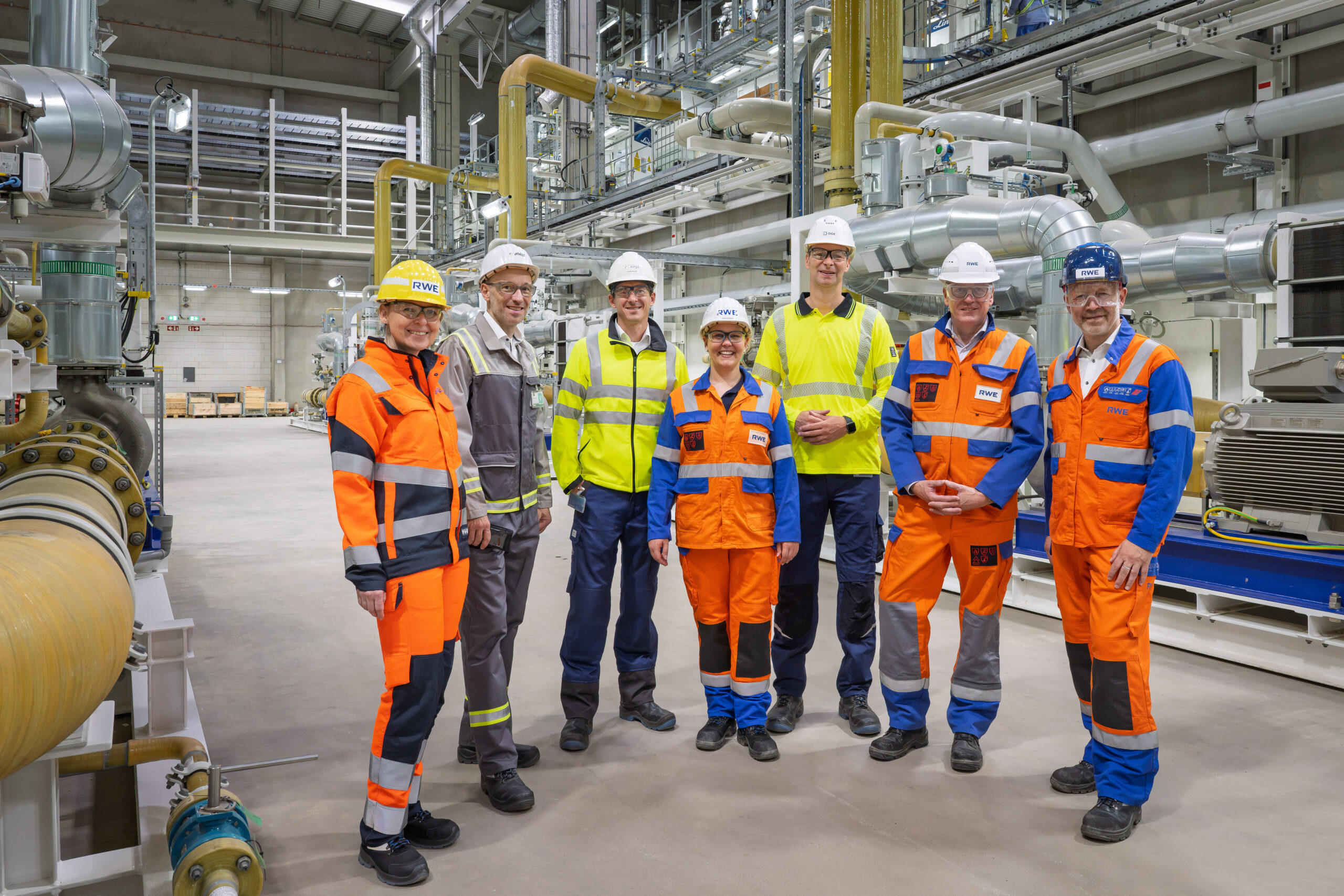
The first electrolysis-produced hydrogen (or green hydrogen) has successfully reached Evonik’s Marl Chemical Park, Marl, Germany, after being produced in RWE’s electrolysis plant in Lingen, Germany. It was transported through a 120km pipeline network operated by Nowega, OGE and SYNEQT (a subsidiary of Evonik).
RWE’s green hydrogen complies with the EU requirements for renewable fuels of non-biological origin, meaning customers can list the use of the hydrogen under their decarbonisation efforts.
Nikolaus Valerius, CEO of RWE Generation SE, said: “The fact that certified renewable hydrogen from Lingen has reached Marl via pipelines shows that electrolysis, transport infrastructure and industrial offtake can work together. We are now moving ahead quickly towards the full commissioning of our electrolysers. Over the coming months, we will prepare the plants for commercial operation.”
Frank Heunemann, Managing Director of Nowega, commented: “The early exchange and joint project development with the first customers using the transport infrastructure as part of GET H2 have paid off. By starting at an early stage and working together constructively, we are creating important momentum for the design of the new overall system. We are now moving into the practical phase, where the individual elements will work together in operation. As part of the GET H2 TransHyDE research project, the companies had already gained initial experience in recent years. This experience can now be expanded through operation of the complete system under real-world conditions.”
Thomas Hüwener, CEO of OGE, followed: “With GET H2 Nukleus, our first hydrogen pipelines are now entering network operation. This is an important step in establishing a hydrogen economy in the region and in Germany. At the same time, the project is creating important foundations for the future market design and allowing us to test key processes such as network access, capacity booking and balancing under real operation conditions.”
Thomas Basten, Chairman of the Management Board of SYNEQT, concluded: “Our perseverance is paying off. With this jointly implemented project, we are taking another important step towards sustainable transformation and the future-oriented development of the Chemical Park. Once the hydrogen reaches Marl, it is available for direct use in industrial processes. At the same time, its availability makes the site more attractive for new businesses. The long-standing cooperation between all partners has made this possible. By pooling our experience, knowledge and expertise, we have laid the foundations for the hydrogen ramp-up.”