
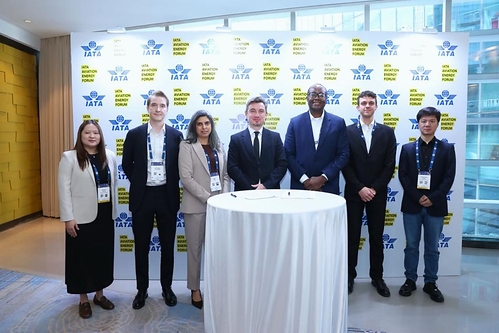
Envision Energy and the International Air Transport Association (IATA) will collaborate on scaling electro-sustainable aviation fuel (e-SAF) through a memorandum of understanding that was signed during the IATA Aviation Energy Forum, Guangzhou, China.
The collaboration identifies three major barriers to e-SAF adoption: production efficiency, cost and inconsistent carbon accounting. A report examining how renewable power and green hydrogen production can be integrated with fuel synthesis to improve efficiency will be published, also exploring the reduction of production costs, commercial viability through policy, and how e-SAF adoption by airlines can be supported with more consistent carbon accounting practices and market mechanisms.
The companies will then explore further next-generation e-SAF production technologies by bringing together supply chain participants – supporting wider industry adoption.
Denis Zaica, SAF Global Head of Commercial at Envision Energy, commented: “Aviation’s transition will require a portfolio of solutions and e-SAF has an important role to play alongside other sustainable fuels. By connecting abundant renewable energy with aviation’s need for low-carbon liquid fuels, e-SAF can open new pathways for the industry. As a global green technology company, Envision brings together expertise in renewable energy and integrated energy systems to advance e-SAF towards a scalable solution for aviation.”
Marie Owens Thomsen, Senior Vice President, Sustainability and Chief Economist at the IATA said: “e-SAF has the potential to become an important part of air transport’s decarbonisation. But scaling new technologies takes more than ambition; it requires the aviation ecosystem – including energy companies – to work together, share expertise and learn from each other. Partnerships like this can help build the knowledge, business models and policy frameworks needed to turn e-SAF’s potential into a scalable solution.”