

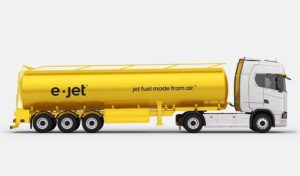
For emerging eSAF producers, a key question is whether next-generation fuels can integrate into existing logistics systems without major infrastructure changes. By working with World Fuel, Twelve is assessing the operational requirements needed to deliver CO2-based fuels through the same global network already used for conventional jet fuel.
'When a global fuel logistics leader with World Fuel’s safety record and operational scale collaborates with an eSAF producer, like Twelve, it signals a fundamental market shift,' says Ashwin Jadhav, vice president of business development, Twelve.
World Fuel brings decades of global experience in aviation fuel logistics, safety protocols, blending, storage, and quality assurance. Applying these systems to eSAF supports consistent handling standards and a clear operational framework for airlines exploring CO2-based fuels. For carriers, this means access to eSAF through familiar procedures and existing infrastructure. Following Twelve’s success with customers such as Alaska Airlines and International Airlines (parent company of British Airways), access to this infrastructure network will be critical as more global airlines look to purchase eSAF globally.
'Twelve’s carbon transformation technology represents a forward step in diversifying SAF supply options,' said Brad Hurwitz, senior vice president of Supply and Trading for World Fuel.
The collaboration also offers broader value to the emerging eSAF sector. As aviation organizations evaluate pathways to reduce lifecycle emissions amid long-term growth projections, validation of logistical readiness helps clarify scalability and informs future investment decisions. Demonstrating that the commercial infrastructure can accommodate new fuels supports the industry’s ability to expand supply in a measured, operationally consistent way.
As Twelve advances toward key 2026 milestones, including first commercial flights powered by its eSAF from AirPlant™ One, currently under construction in Moses Lake, WA, the World Fuel collaboration provides the infrastructure foundation that makes industrial transformation operationally viable. This is what de-risking innovation looks like: old and new working together to build the commercial systems that scale climate solutions.