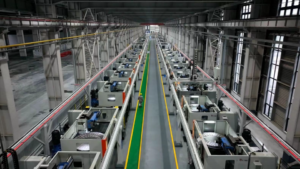



RCT GH GmbH (RCT Hydrogen), a manufacturer of machines and systems for hydrogen production, will start manufacturing electrolyzer stacks in the heart of Thuringia in the first quarter of 2025. Production of the systems is planned for initial megawatt projects in hydrogen production for German industrial companies using the 'hydrogen-as-a-service' model. Additional systems with an electrolyzer capacity of over 30 MW are currently in the planning stage.
With the signing of cooperation agreements between RCT Hydrogen and an experienced production partner in eastern Germany on December 22, 2025, the starting signal was given for the preparation of a production facility for hydrogen equipment. The production of electrolyzer plants with an annual capacity of 250 MW (megawatts) will begin with the installation of a 2.5 MW electrolyzer in the first quarter of 2026. Delivery and commissioning are still planned for the third quarter of 2026 at a German industrial company.
Peter Fath, Managing Director of RCT Hydrogen, says: 'We have now taken the decisive step toward producing robust and durable electrolyzer technology, which is necessary for the production of cost-effective green hydrogen in Germany.' The proven technology used in RCT Hydrogen’s plants is called alkaline pressure electrolyzer and is known for its durability and efficiency. With the high quality standards of a premium German manufacturer and TÜV-certified technology, the first industrial customers have also been convinced to integrate hydrogen production into their own manufacturing processes. Here, too, a preliminary agreement for the delivery of two 2.5 MW electrolyzer was signed in December.
Eric Rüland, Vice President Sales and Products, adds: 'We expect this to trigger a real hydrogen boom, as it will enable the use of hydrogen for industry at reasonable costs for the first time, based on the power grid with 75–100% renewable electricity. This particularly concerns the so-called ‘hydrogen-as-a-service’ solutions, in which RCT Hydrogen and its partners take over the production of hydrogen at the customer’s site and the industrial customer can then purchase the hydrogen gas at fixed prices.'
Various partners in Europe have also been found for this model, with whom further projects will be developed in the coming months. 'In direct comparison with natural gas prices, the price of hydrogen per kilowatt hour is still around 20–50% higher, but this is offset by a CO2 price, which currently stands at around EUR 83 per tonne of CO2,' Rüland continues. The switch from gray hydrogen to low-carbon hydrogen, i.e., hydrogen produced with low CO2 emissions, or green hydrogen, is particularly interesting for customers who already use hydrogen in their own industrial processes. Especially if the previous hydrogen supply was obtained via trailers and trucks, switching to the hydrogen-as-a-service model with equipment from RCT GH can result in interesting cost advantages.
RCT Hydrogen Begins Production of Electrolyzer Plants in Germany